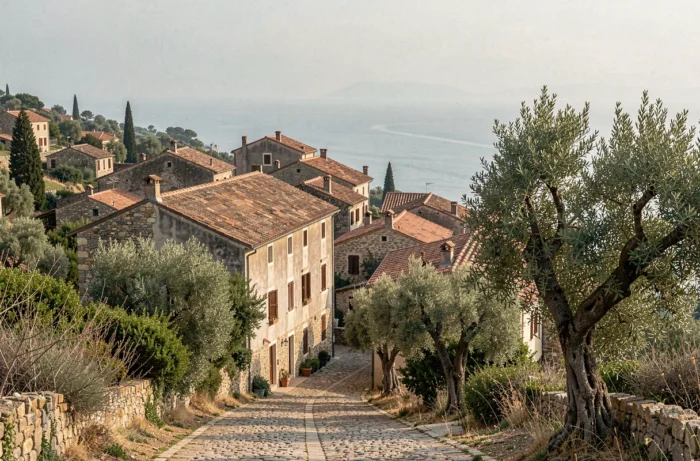
What do you measure when comparing Casinca with the other micro-regions of Haute-Corse? Not just the density of hilltop villages or the number of Romanesque chapels, but a small area’s ability to bring together three distinct elements: stone-and-slate heritage, distinctive local agriculture and direct access to the eastern coastline. Few Corsican cantons pack so many layers into such a short distance.
Hilltop villages, coastline and local producers: three elements in one area
Folelli, on the coastal plain, is a starting point for exploring the beaches of the eastern coast and the villages of Casinca and Castagniccia. This dual access to mountains and sea makes it easy to plan a day out without spending hours on the road.
The inland villages stand out for their stone houses with slate roofs and Romanesque chapels. This architectural style, found throughout the micro-region, is not seen in the same concentration along the coast or in nearby seaside resorts.
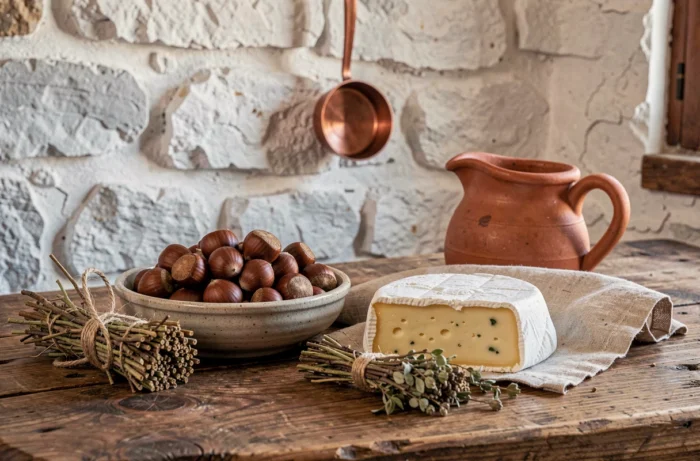
Local agriculture is more than just a backdrop. It is a defining feature of Casinca: chestnut groves, orchards and free-range livestock farming. Producers based between the hilltop villages offer short supply chains that ground a visit in economic reality, not just aesthetics. Practical and heritage information is available at casinca.fr, which lists the region’s sectors and local businesses.
Casinca compared with nearby micro-regions of Haute-Corse
A comparison table helps show what Casinca has to offer and how it differs from two nearby micro-regions often confused with it in general travel guides.
| Criterion | Casinca | Castagniccia | Eastern Plain (Fiumorbo) |
|---|---|---|---|
| Direct access to the coast | Yes (Folelli, eastern coast beaches) | No (landlocked in the mountains) | Yes (beaches, but little hilltop architectural heritage) |
| Romanesque heritage (chapels, churches) | High concentration in the villages | Very high | Low |
| Stone-and-slate architecture | Predominant | Predominant | Rare |
| Local producers and short supply chains | Chestnuts, charcuterie, cheeses | Chestnuts, honey | Citrus fruit, vineyards |
| Travel time from Bastia | Short (easy access via the plain) | Longer (winding roads) | Moderate |
Castagniccia shares the same architectural heritage but remains landlocked, with no direct access to the sea. The eastern plain offers coastal access, but its hinterland lacks hilltop villages and Romanesque chapels. Casinca is the only one of the three to bring both together within a half-hour’s drive.
A day trip through Casinca: villages, local producers and the beach
Taking a practical approach is what sets a stay in Casinca apart from a quick stopover. To experience all three elements of the region in one day, it helps to follow a specific order.
Morning in the inland villages
Set off early for the hilltop hamlets. The stone lanes, fountains and Romanesque chapels are best explored before the heat of the day. Each village retains a concentric layout around its church, with vaulted passageways connecting the houses.
- Penta-di-Casinca: one of the most photographed villages, with slate roofs visible from the plain
- Loreto-di-Casinca: a Romanesque chapel and sweeping views over the eastern coast
- Venzolasca: a gateway to the chestnut groves and orchards below
Stop by local producers
Several farms between the villages and the plain sell directly to visitors. Sheep’s cheese, farm-made charcuterie and chestnut flour: the products reflect the altitude and vegetation cover of each plot. This stop turns a journey into a food experience rooted in local knowledge, rather than a tourist detour.
Afternoon on the coast
Head back down to Folelli and the sandy beaches of the eastern coast. The contrast with the stony landscape of the morning is striking. The drive from the villages to the beach takes less than half an hour, avoiding the fatigue of an overly ambitious itinerary.
Biguglia Pond: an additional excursion beyond Casinca
The Biguglia Pond nature reserve often appears in guides alongside Casinca. It spans several coastal municipalities, but it is not located in the villages of Casinca themselves. Distinguishing it from the Casinca area helps avoid a common misconception.
This protected wetland is home to remarkable birdlife and makes a natural extension to a visit for anyone with a second day to spare. It is easy to reach from Folelli by following the coast north. Its appeal lies in the change of scenery: after the dry-stone walls and maquis of the hilltop villages, the reed beds and open water offer a completely different landscape.
Romanesque heritage in Casinca: what the chapels reveal
The micro-region’s Romanesque chapels are more than architectural curiosities. Their locations follow the routes of the mule tracks that connected the villages before modern roads were built. Each building marks a crossroads, a mountain pass or the boundary of a pastoral area.
Casinca’s Romanesque architecture reads like a map of how the land was once used. Local schist walls, east-facing apses and carved lintels bear witness to craftsmanship passed down through village communities over several centuries. Looking closely at these details during a visit adds a depth that a guidebook’s simple mention of a “Romanesque chapel” cannot convey.
Casinca’s distinctive character lies in this layering: clearly visible architectural heritage, producers rooted in the local landscape and easy access to the coast. Three elements within less than a half-hour’s drive—that is the best way to sum up this micro-region.