The Lys Valley, between French Flanders and the Belgian border, brings together issues rarely covered in conventional travel guides: flood resilience, continuity of cycling infrastructure, and tensions between ecological restoration and agricultural use. Assessing the area’s actual condition before visiting helps distinguish the promises of responsible tourism from what works on the ground.
Hydraulic restoration and access to the banks of the Lys: what the works are changing
Following the floods of November 2023 and January 2024, projects were launched in the Lys basin to restore floodwater storage areas. In Saint-Venant, work on the Vieille Lys aims to improve the waterway’s flow and reduce risks downstream.
These projects have a direct impact on local tourism. Towpaths and riverbanks accessible to walkers and cyclists may be closed or damaged for several months. Before planning an outing along the Lys, check route conditions with the municipalities along the way to avoid unpleasant surprises.
An Horizon Actu report on Saint-Venant also describes tensions between waterway managers and riverside farmers, particularly over access for farm machinery to private plots. This aspect of local governance is absent from tourist brochures, even though it affects the quality of the infrastructure on which low-impact tourism depends.
Sites such as tuscany-unpacked.com document how other European regions balance natural heritage with local uses, offering a useful comparison that places the challenges facing the Lys in a broader context.
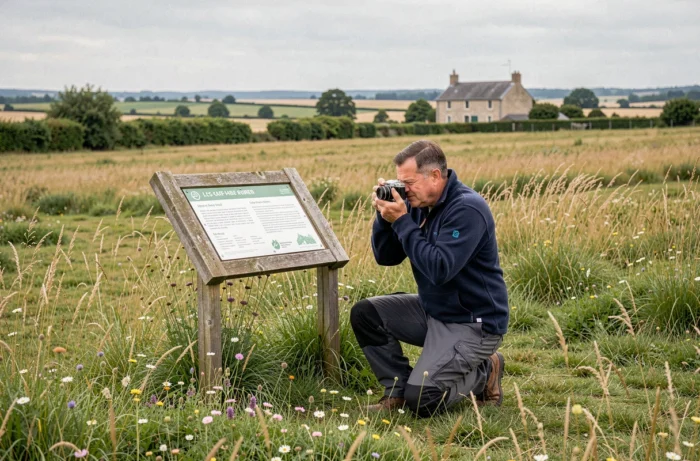
River tourism and the Golden Leie-Lys project: assessing cross-border infrastructure
The Interreg Golden Leie-Lys project brought together seventeen operators on both sides of the French-Belgian border. Its final report, dated 31 August 2023, provides a useful framework for assessing what has been delivered.
| Project focus | Stated objective | Observable status |
|---|---|---|
| River tourism services | New products and activities on the Lys | River-based activities launched, signage harmonized across operators |
| Visitor infrastructure | Attract investors and visitors | Access points developed, but continuity varies by municipality |
| Landscape integration | Minimize ecological impact | Commitments included in the specifications, long-term results not measured |
| Economic benefits | Create local jobs | Jobs linked to new activities, consolidated data not published |
The table highlights a common gap in Interreg projects: physical deliverables are in place, but medium-term impact monitoring remains unclear. For visitors, this means the quality of the experience varies from one municipality to another. Merville, La Gorgue and Sailly-sur-la-Lys do not offer the same level of service.
Signage and connections between municipalities
The project harmonized signage across the cross-border area. Directional signs and information markers follow a shared visual identity. However, the actual connections between points of interest depend on each local authority’s maintenance of the paths.
Hikers and cyclists following the Lys route between Aire-sur-la-Lys and the Belgian border may encounter well-marked sections followed by stretches where the signage stops. Route continuity remains the weak link in river tourism in this valley.
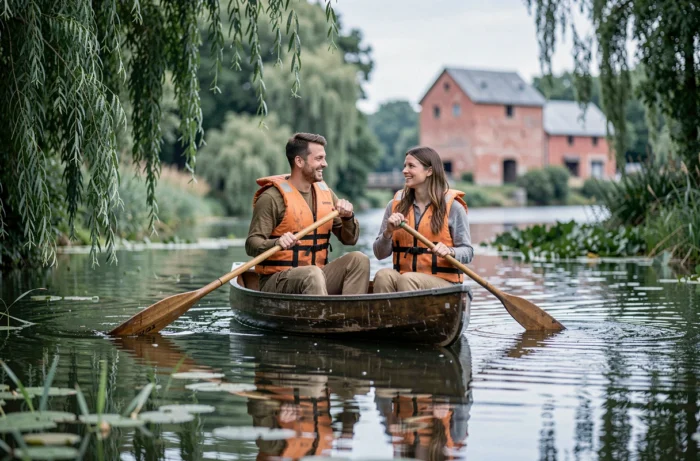
Eco-friendly accommodation in the Lys Valley: ecolodges and cabins
The Hauts-de-France region has highlighted the development of ecolodges along the Lys. These accommodations, often cabins or lightweight wooden structures, are designed to have a small footprint on the land.
A few criteria can help distinguish genuinely eco-friendly accommodation from a simple marketing makeover:
- Construction uses bio-based or locally sourced materials, and the structure is reversible (it can be dismantled without permanently altering the land).
- Water and energy are managed using self-sufficient or low-consumption systems (rainwater harvesting, solar panels, composting toilets).
- The operator helps maintain the surrounding natural environment, for example by caring for the riverbanks or limiting nighttime lighting to protect wildlife.
- Any label or certification displayed (Clef Verte, EU Ecolabel) can be verified and is up to date.
The “hiker’s cabin” described on the Hauts-de-France regional website is an example of this model. The accommodation serves as a stop along a hiking route, rather than a destination in its own right. This approach encourages passing visitors, with short stays and limited pressure on the environment.
Visitor capacity and tourism pressure
Ecolodges remain scarce in the Lys Valley. This has a dual effect: it preserves the sites’ secluded character, but concentrates demand on a handful of properties. During the summer, booking in advance becomes the norm.
For the region, the challenge is to maintain a sustainable accommodation offering without multiplying properties to the point where the landscapes that make the valley appealing lose their distinctiveness.
Cycling and hiking routes along the Lys: current trail conditions
Cycling is the mode of transport most consistent with a responsible approach to exploring the valley. Several routes run alongside or near the Lys, following towpaths managed by VNF (Voies navigables de France).
The most accessible sections are between Merville and Haverskerque, where the compacted surface makes year-round cycling possible. Farther north, toward Belgian Flanders, the paths alternate between paved sections and dirt tracks that become impassable after heavy rain.
- From Merville to Sailly-sur-la-Lys, the route follows the left bank, with views of wet meadows and old mills.
- Between Saint-Venant and Aire-sur-la-Lys, the route passes built heritage linked to the valley’s linen-making history.
- The cross-border route into Belgium uses roads shared with agricultural vehicles on some sections.
The quality of the experience depends directly on the season. In spring, water levels remain high and the riverbanks can be muddy. Autumn offers the best trail conditions, with dry paths and fewer visitors.
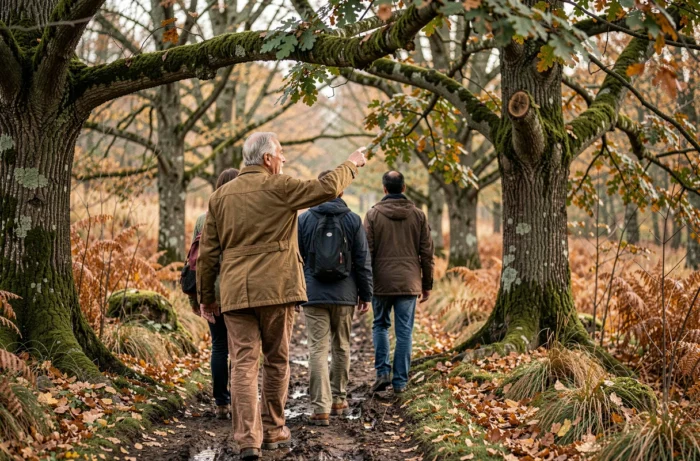
Heritage and ecosystems of the Lys Valley: what’s worth a visit
The Lys Valley is more than just a waterway. The area is home to wet meadows that serve as ecological corridors between the Flemish plain and the Aa basin. These habitats support a diverse bird population, particularly during migration.
The region’s built heritage reflects its textile and agricultural history. Old retting pits, where flax was soaked in the waters of the Lys to separate the fibers, can still be seen near several villages. This understated industrial heritage tells the story of how water, soil and human activity shaped the landscape we see today.
Wetlands and ecological corridors
The floodwater storage areas restored as part of the hydraulic works also serve an ecological purpose. By temporarily holding water, they create favorable habitats for amphibians, aquatic insects and wading birds.
Responsible tourism in the Lys Valley depends on preserving these wetlands. Any increase in visitor numbers without proper management risks damaging the habitats people come to see. Not all the municipalities responsible for these areas have the resources to carry out regular ecological monitoring, leaving uncertainty about how local biodiversity is actually changing.
The Lys Valley offers a tangible way to measure the gap between the ambitions of responsible tourism and their implementation. Cross-border infrastructure is in place, sustainable accommodation is developing, and routes have been mapped. The limiting factor is neither supply nor demand, but local authorities’ ability to maintain what has been built over the long term.