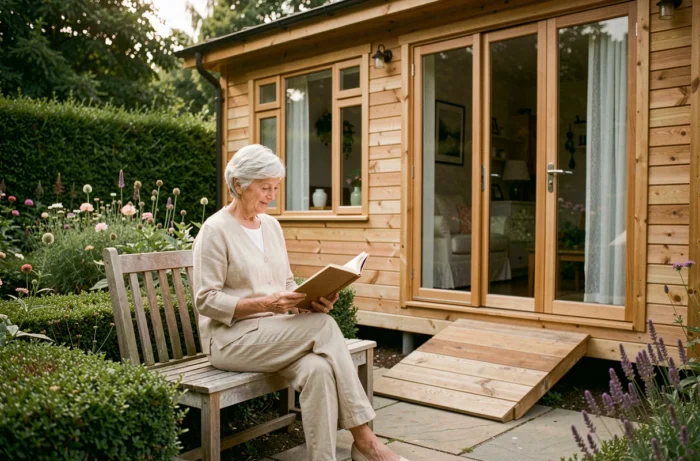
A garden studio adapted for seniors is a lightweight structure, usually timber-framed, built at ground level on the family property to provide independent accommodation for an older person. This type of housing meets a specific need: keeping family members close without requiring them to live under the same roof.
Planning regulations and taxes: what to consider before building a garden studio
Before choosing a model or comparing quotes, the first step is to contact your local council’s planning department. Any construction that creates floor area or a building footprint may require a prior works declaration or, depending on the project, a building permit. Rules vary from one municipality to another, particularly in protected areas or housing developments subject to specific covenants.
One point that often comes as a late surprise: a development tax may be payable whenever enclosed, covered floor space is created. The amount depends on the taxable floor area and the rate set by the local authority. Checking this cost before committing can help avoid an unexpected bill of several hundred or even several thousand euros.
Installing a garden studio for seniors also means planning for utility connections (water, electricity and drainage). Their cost and feasibility depend on the distance from the main house and the layout of the property.
Accessibility in senior housing: the technical criteria that matter
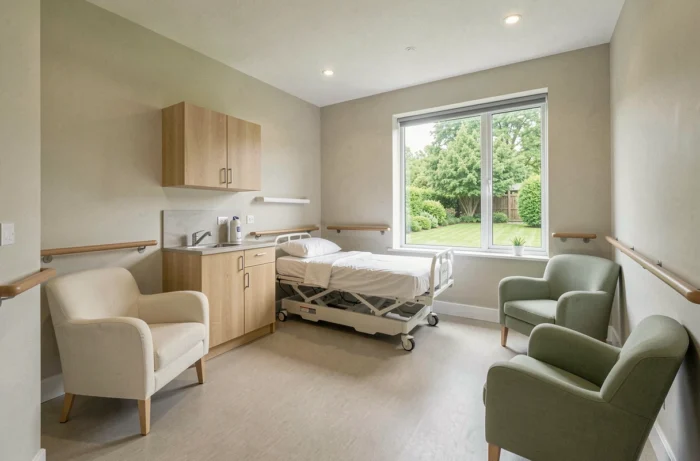
Single-storey access is essential, but it is not enough on its own. A studio that is genuinely suitable for an older person depends on technical choices that affect everyday use.
- Doorways must provide enough clear width for a walking frame or wheelchair, and doors should have lever handles rather than round knobs.
- An accessible bathroom includes a level-access shower, grab rails securely fixed to the wall structure (not simply glued on), and non-slip flooring.
- Automatic lighting with motion sensors reduces the risk of falls when moving around at night.
- The threshold between the interior and the patio or garden should be level to prevent obstacles.
These features are not optional comforts. They determine whether the studio remains usable as mobility gradually declines.
Insulation and year-round thermal comfort
A poorly insulated timber-frame home can become stifling in summer and freezing in winter. Older people are less able to regulate their body temperature, making the quality of the building envelope particularly important.
The walls, floor and roof should be insulated to a standard that meets current regulations. A heating system with precise temperature control (such as a reversible air-to-air heat pump) can maintain a stable temperature without requiring complicated manual adjustments.
MaPrimeAdapt’ and financial assistance: separating fact from fiction
Several commercial websites suggest that public grants directly fund the construction of a garden studio. The reality is more nuanced. MaPrimeAdapt’ funds adaptations to existing homes, not the construction of a new building. This grant from Anah covers accessibility improvements to a primary residence, subject to age, disability and income requirements.
Other funding options may be available for the studio itself: a standard bank loan, personal savings or, in some cases, specific departmental grants. The tax credit for home adaptations may apply to certain fixtures (grab rails, an adapted shower), but the studio’s structural framework is generally not covered.
The difference between the price advertised by manufacturers and the project’s actual cost (utility connections, groundworks, development tax and interior finishes) can be significant. Requesting a full project estimate before signing is the only reliable way to compare offers.
Gradual loss of independence: when a garden studio is no longer enough
An adapted garden studio is suitable for someone who is still independent or just beginning to lose some independence. Yet many families put off a crucial question: what happens if their care needs increase?
An independent studio is not a care facility. It does not provide ongoing on-site care or guaranteed overnight assistance. If a parent needs help getting up, washing or eating, home care services must be arranged and funded separately.
Personal care and funding for home care
The APA (personalised autonomy allowance) can cover some home care hours, depending on the level of dependency assessed by the department. Home nursing services can provide additional medical care. These services are available regardless of the type of accommodation, including a garden studio.
Limitations arise when the number of hours needed exceeds what local services can provide, or when round-the-clock support becomes necessary. At that point, the studio may still be physically accessible, but the support arrangements around the occupant become the real issue.
The alternative of inclusive housing
For families anticipating a more significant loss of independence, inclusive housing offers another option. This model combines private homes with shared spaces and a shared social living project. Where available in the department, the shared living support allowance funds activities for this community project. It is paid to the housing provider, not directly to residents.
This option is not a substitute for a nursing home (it does not provide permanent care), but it helps reduce isolation, which remains a real drawback of an individual studio in the family garden.
Garden studios for seniors: plan the project to meet future needs
The studio’s floor area affects quality of life every day. A space that is too small makes it harder to get around with a walking frame. A space that is too large increases both the cost and the maintenance burden. Most manufacturers offer modules ranging from twenty to forty square metres, enough to include a sleeping area, a bathroom, a living space and a kitchenette.
The most important decision is not the floor area, but whether the studio can adapt as needs change: replacing a bathtub with a walk-in shower, adding grab rails or widening a doorway. A studio designed from the outset to accommodate these changes costs less to adapt than a standard model modified later.
Moving a parent into a garden studio buys time as they age; it does not make the challenges disappear. The success of the project depends as much on the quality of the construction as on how realistically the family plans for the next stage.