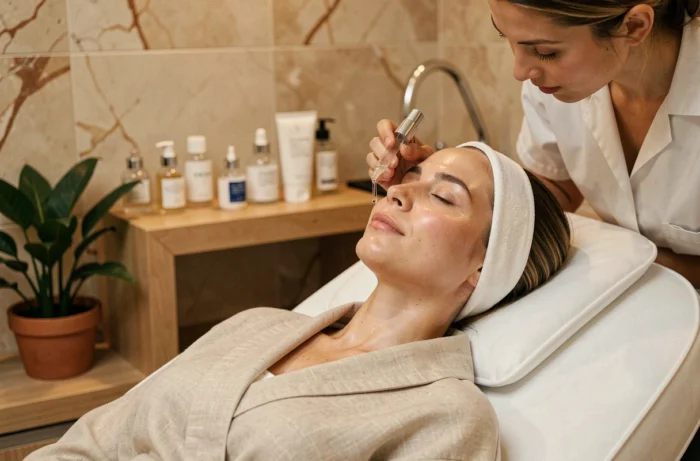
Geneva has a varied climate: cold, dry winters with indoor heating, summers when UV levels rise quickly, and in-between seasons when winds off the lake leave cheeks feeling tight.
These changes mean facial skin needs regular adjustments that many standard skincare routines don’t account for. Understanding what actually stresses the skin at each time of year makes it easier to choose the right facial treatments, at a salon or at home, without accumulating unnecessary products.
UV index in Geneva: the factor the weather can hide
The reliable way to assess skin risk is not the temperature but the UV index. It’s recommended to protect your skin from a UV index of 3 and limit direct exposure when the index reaches 8.
A cloudy spring day doesn’t stop UVA rays from getting through. Anyone booking facial treatments in Geneva at a beauty salon should factor this into their daily routine between appointments.
A moisturizing or dark-spot treatment performed in the salon will be less effective if your face is exposed to the sun without protection in the days that follow. The American Academy of Dermatology recommends applying a broad-spectrum SPF 30 or higher to exposed areas, even in winter. This advice is particularly relevant in Geneva, where reflections off the lake and the proximity of the Alps increase actual exposure.
Dry skin in winter in Geneva: indoor air matters as much as the cold
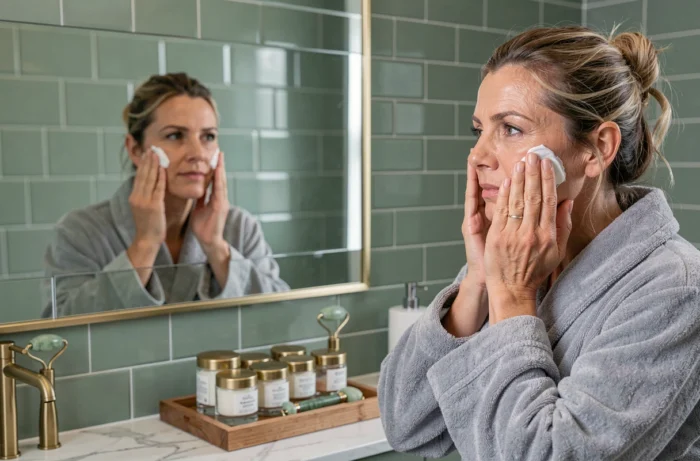
Cold outdoor temperatures slow sebum production and weaken the skin barrier. This is well known. Heated indoor air plays an equally important role. In Geneva apartments and offices heated for several months of the year, humidity drops enough to make the skin lose water through accelerated evaporation.
The American Academy of Dermatology recommends switching from a lightweight lotion to a richer cream or balm and reducing the frequency of potentially irritating active ingredients (retinol, exfoliating acids). A salon treatment focused on restoring lipids, such as a nourishing mask or a wrap made with plant butters, can complement this seasonal adjustment.
A common pitfall is to layer on active serums in winter to compensate for a dull complexion. Skin already weakened by cold and dry air doesn’t tolerate the buildup well. A simpler approach focused on hydration and protecting the skin barrier generally delivers better long-term results.
Certificate of competence for beauty salons: what has changed in Switzerland
Since June 1, 2024, several treatments involving non-ionizing radiation have required a certificate of competence in Switzerland. These include certain devices used for facial treatments in beauty salons, such as intense pulsed light, some aesthetic lasers, and high-powered LEDs.
For clients, this regulation makes a difference in two ways:
- Before booking a treatment that uses a radiation-emitting device, it’s reasonable to ask the salon whether the person performing it holds the required certificate.
- A salon that clearly displays its staff’s qualifications and its devices’ certifications sends a strong signal of professionalism. If this information is missing from the website or treatment room, it’s worth asking about.
- Traditional hands-on treatments (cleansing, facial massage, application of cosmetic masks) are not subject to this requirement. Some salons’ communications still blur the distinction between cosmetic treatments and device-based procedures.
This recent regulatory requirement is not yet consistently highlighted by Geneva professionals. Checking before your first appointment can help avoid unpleasant surprises.
Cosmetic treatment or medical procedure: a distinction worth clarifying
An injectable “skin booster,” sometimes offered in beauty salons, is not the same as a cosmetic treatment applied to the skin. Injections are medical procedures and are regulated differently. In Geneva, some businesses combine beauty services and medicine in the same space, which can make things less clear for clients.
When a salon offers both traditional facials and injections, it’s worth checking who performs each procedure. A cleansing treatment or Kobido massage is a beauty service. An injection of hyaluronic acid must be performed by a doctor. Confusing these two categories is no small matter when it comes to safety.
Adapt your skincare routine to Geneva’s seasons
Rather than sticking to the same routine all year, Geneva’s climate calls for a seasonal approach. Three adjustments can make a noticeable difference to your skin’s radiance and comfort:
- From November to March, choose richer textures and limit harsh exfoliants. A salon treatment focused on nourishment and repair, spaced four to six weeks apart, helps support the skin barrier under stress.
- From April to June, switching to lighter textures can go hand in hand with a seasonal salon treatment (deep cleansing, lightweight hydration) to prepare the skin for increasing sun exposure.
- From July to September, daily sun protection becomes essential. An after-summer treatment focused on repairing UV damage and restoring hydration can help limit accelerated skin aging.
This schedule isn’t set in stone. Oily skin will react differently from atopic skin to the same conditions. The value of consulting a beauty professional, at least at the change of each season, lies precisely in this individualized assessment—something standardized social media routines can’t provide.
Geneva’s facial treatment market is crowded, with independent salons, chains, and medical practices. The quality of a treatment is measured neither by its price nor by its décor, but by the professional’s ability to tailor their approach to the skin’s actual condition, season after season.