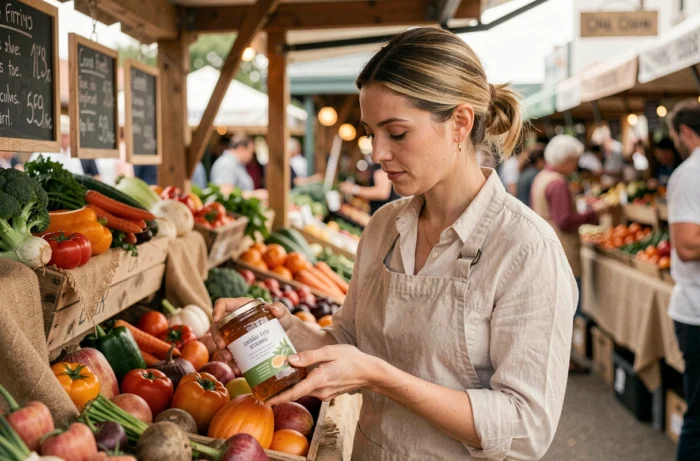
A product labelled “organic” certifies a production method governed by European standards: no synthetic pesticides, no GMOs and crop rotation. A “natural” product, by contrast, has no regulatory definition in the food sector. Distinguishing between these terms is the first step towards making more informed choices in your everyday shopping.
Organic, natural and local: what each label guarantees
The AB (Agriculture Biologique) logo or the European organic leaf certifies that a product complies with the current organic regulations. This organic label certifies farming practices, not geographical origin. An organic vegetable can come from Spain or Morocco and still carry the European organic leaf.
The word “natural” on food packaging carries no legal obligations. It is a marketing term. A “100% natural” fruit juice may contain flavourings extracted using industrial processes without breaking any rules.
“Local” or “short supply chain” tells you how far the product has travelled from where it was produced to where it is sold, but says nothing about the treatments used on the crops. Platforms such as shoopeo.fr make it possible to compare different products and more easily identify those that combine organic certification with a clearly stated origin.
In short, organic, natural and local are not interchangeable. Each term refers to a specific aspect. Checking which one appears on the packaging—and what it actually guarantees—helps avoid costly assumptions.
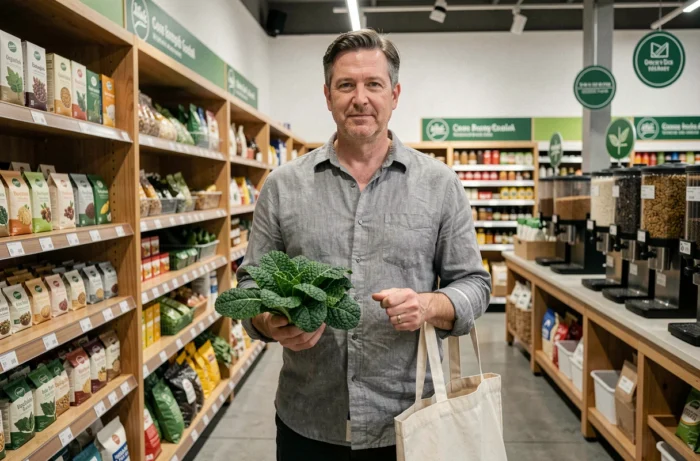
Which foods to prioritise buying organic
Switching your entire diet to organic overnight can put a strain on your budget. The most effective approach is to start with products where the difference in pesticide residues compared with conventional farming is greatest.
Thin-skinned fruit and vegetables
Apples, strawberries, lettuce, peppers and grapes regularly rank among the most heavily treated foods in conventional farming. Since they are eaten with their skin or leaves, exposure to residues is direct. Thin-skinned fruit is the first category to switch to organic.
Whole grains and everyday staples
Brown rice, wheat and oats retain their outer layers, where any residues may accumulate. Organic eggs (code 0 on the shell) guarantee free-range farming conditions and animal feed produced without synthetic pesticides. Extra-virgin oils, cold-pressed and eaten raw, deliver their contents directly to the body.
By contrast, foods such as avocados, bananas and pineapples have thick skins that are not eaten. From a strictly health perspective, there is less benefit to buying them organic, even though organic farming is still gentler on the soil.
How to read organic and natural product labels
A processed product bearing the organic logo can still contain added sugar, excessive salt or additives permitted under organic standards. The organic label does not automatically guarantee a suitable nutritional profile.
Two practical habits to adopt when checking packaging:
- Check the ingredients list, which is ordered by weight from highest to lowest. If sugar or oil appears among the first three ingredients, the product is still processed, whether organic or not.
- Look for the European organic leaf logo alongside the certification body’s code (FR-BIO-XX). If it is missing from a product sold as “organic”, that is a warning sign.
- Check the origin stated beneath the organic logo. “EU/non-EU Agriculture” indicates a mix of origins, sometimes from far away.
For cosmetics and household products labelled “natural”, even greater care is needed. Since the term is not regulated, only independent labels (Ecocert, Cosmos Organic, Nature et Progrès) provide verifiable assurances about the ingredients.
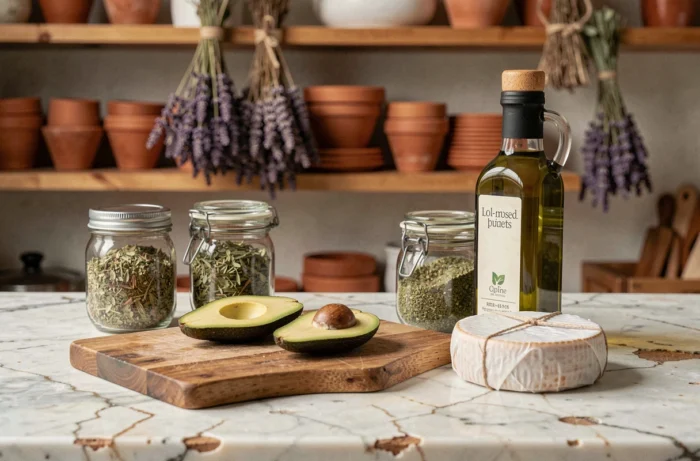
Where to buy organic: specialist shops, supermarkets or direct from producers
Where you shop affects prices, traceability and the range of products available. In recent years, specialist organic shops have seen a stronger rebound in footfall than supermarkets. This resurgence is partly due to more in-depth advice and often more transparent sourcing.
Buying direct brings you closer to the producer, but does not guarantee organic certification. A market gardener at a farmers’ market may use sustainable farming methods without being certified. Organic certification remains the only objective benchmark, whatever the supply chain.
Supermarkets have expanded their organic sections, but the range is still dominated by processed products (biscuits, ready meals and drinks) whose nutritional value is debatable. Choosing unprocessed foods (dried pulses, flour, oils and eggs) from these sections makes organic shopping more worthwhile while keeping costs down.
Balancing organic and seasonal
An organic fruit flown in from abroad out of season does not have the same overall impact as a conventionally grown fruit produced nearby and picked when ripe. Combining organic with seasonal produce is the most consistent approach to reducing both pesticide exposure and the environmental impact of transport.
- Seasonal fruit and vegetables are often richer in vitamins and less expensive, whether organic or not.
- Dried pulses (lentils, chickpeas and beans) keep for a long time, are inexpensive when organic and can replace some of the meat in your diet.
- Organic spices and herbs bought in bulk cost less than small packs and keep for several months.
Making better choices every day does not mean switching entirely to organic overnight. The most tangible benefits come from a methodical approach: prioritise the foods most exposed to pesticides, understand what the label actually covers, and choose where to shop based on traceability rather than the label alone.