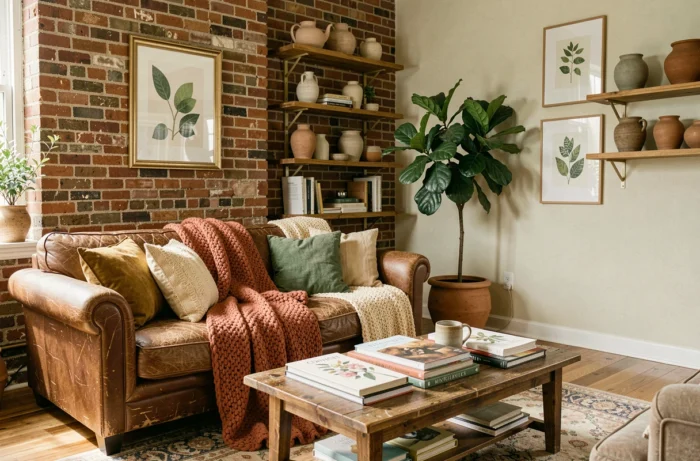
Creating a harmonious interior involves coordinating far more than colors and furniture. Three often-overlooked factors can have as much impact on the final result as the choice of color palette: the air quality effects of materials, layered lighting tailored to different activities, and the decor’s ability to adapt to the household’s changing needs.
This article compares these factors, assesses their relative impact, and explores the practical trade-offs that make the difference between an interior that simply looks good and a space that is genuinely comfortable to live in.
Indoor air quality and decor choices: an underestimated connection
Paints, adhesives, varnishes, and some furniture panels release volatile organic compounds (VOCs) for weeks, sometimes months, after installation. The French label rates emissions from A+ (lowest emissions) to C, providing a useful point of comparison when shopping.
This rating alone does not guarantee healthy air, but it can help guide your choices. For the same finish, an A+-rated varnish emits significantly fewer pollutants than a B-rated one. Applying this filter to wall paints, flooring, and furniture panels can reduce the overall chemical load in a room.
Choosing low-emission materials does not mean sacrificing style. Mineral paints, natural wood oils, and solvent-free adhesives are available in a wide range of colors. The key is to check the label before buying, not after applying the product. For more inspiration on interior design on Inside Out, several features explore how to combine aesthetic choices with healthy materials.
Indoor lighting: a room-by-room, use-by-use comparison
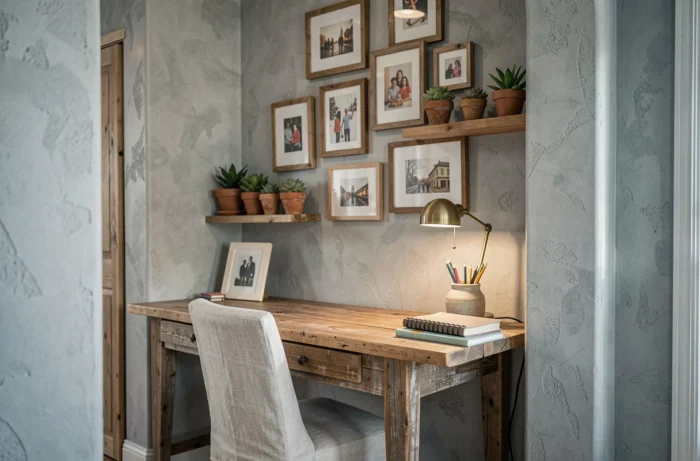
Lighting changes how we perceive colors, proportions, and atmosphere. A living room painted sage green will look dull under a cool white fluorescent light, but warm and inviting under warm lighting. Comparing lighting needs room by room helps you create a cohesive lighting plan.
| Room | General lighting | Task lighting | Ambient lighting |
|---|---|---|---|
| Living room | Diffused pendant or ceiling light, warm tone | Reading lamp by the sofa, desk lamp | String lights, candle, low table lamp |
| Bedroom | Dimmable ceiling light or indirect wall light | Adjustable bedside lamp | Night light or very dim LED strip |
| Kitchen | Bright ceiling light, neutral to cool tone | Under-cabinet spotlights, countertop lighting | Decorative pendant above the table |
| Bathroom | Waterproof wall or ceiling light, neutral tone | Backlit mirror | Candle, low-intensity recessed spotlight |
The key principle: every room needs at least two distinct light sources. A single central pendant flattens the space and removes the depth that materials and colors are meant to create.
Lighting and sleep: an important consideration
In the bedroom, keeping the room dark at night and letting in natural light when you wake up can improve your sleep-wake cycle. A blackout blind paired with a warm-spectrum bedside lamp is enough to create this contrast. Bulbs with a high blue-light component, common in low-cost LEDs, can disrupt melatonin production if left on in the evening.
Color palettes and materials: three factors to consider together
Most interior design guides recommend limiting your palette to three colors. The so-called 60-30-10 rule (dominant color, secondary color, accent color) is a useful starting point, but it says nothing about how materials interact with those colors.
A terracotta wall paired with light wood and linen creates a very different atmosphere from the same terracotta next to black metal and leather. Material affects how we perceive color just as much as the hue itself. Green velvet absorbs light, while green tile reflects it, dramatically changing the feel of a room.
Three criteria can help you decide which combinations work best:
- Light reflection: matte surfaces (linen, raw wood, polished concrete) absorb light and soften the atmosphere, while glossy surfaces (brass, glass, glazed tile) reflect it and energize the space
- Tactile temperature: wood and textiles feel warm to the touch, while metal and stone feel cold. This contrast affects how comfortable a room feels, even when it is well heated
- How materials age: patinated leather or solid wood furniture gains character over time, while laminate or plastic tends to look worn, affecting the overall harmony in the medium term
Adaptable decor: adjusting your home as household needs change
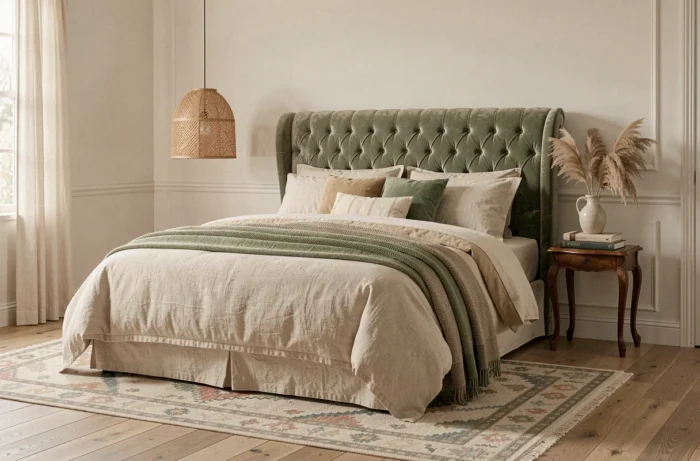
An interior designed for a couple without children may no longer meet the same needs when the family grows. A home office set up during a period of remote work may become unnecessary if routines change. Designing a flexible interior from the outset means you won’t have to rethink everything every time life changes.
Reclaimed pieces as a design choice
Incorporating reclaimed furniture or objects is about more than making an eco-friendly choice. An old door repurposed as a tabletop, a vintage industrial light, or a flea-market mirror adds a distinctive touch that no catalog can replicate. These pieces create visual contrast, breaking up the uniformity of an overly coordinated interior.
Reclaimed pieces can also visually define an area without putting up walls. A secondhand bookcase placed perpendicular to a wall can separate a reading nook from the living area without any renovation work, and can be moved if the layout needs to change.
Multifunctional furniture and built-in storage
A sofa bed, an extendable table, or storage ottomans: these choices are not just for small spaces. They give you flexibility when the way you use a room changes with the seasons or over the years. Investing in a few adaptable, high-quality pieces costs less in the long run than replacing a fixed setup.
The harmony of an interior is not measured by how perfect it looks in a single photograph. It comes from the decor’s ability to remain cohesive as the light changes, furniture is added, and needs evolve. Low-emission materials, layered lighting tailored to each room, and movable or reclaimed pieces provide a stronger foundation than a perfectly matched but inflexible color palette.