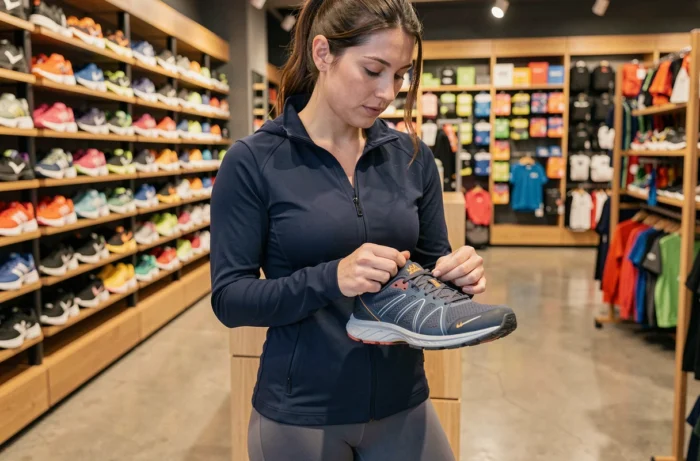
A poorly calibrated sports equipment results in injuries, discomfort, and premature replacements. Choosing your gear in France means balancing precise technical criteria with the realities of the local market, particularly the rise of repair and reuse.
Weight, density, and textile construction: the specs that labels don’t highlight
The composition displayed on a sports garment label (polyester, polyamide, elastane) says very little about the actual behavior of the textile. What matters is the construction of the fabric: woven, knitted, or laminated. A knitted jersey shirt wicks moisture differently than a woven ripstop fabric, even with the same composition.
The weight determines durability as much as thermal comfort. For winter outdoor activities, a sufficiently dense weight protects against the wind without needing an additional layer. For summer running, a lightweight fabric combined with an open mesh promotes ventilation.
Before buying, turn the garment inside out. Flat seams reduce friction over long distances. Classic overlocked seams are sufficient for short sessions but can cause irritation beyond an hour of continuous effort. This detail distinguishes a product designed for regular use from an entry-level item.
Specialized catalogs like the one available at france-sports.fr allow you to compare ranges by discipline, making it easier to identify technical characteristics before heading to the store.
Sports shoes: fit and drop above all
The drop of a shoe determines running posture, not the marketing printed on the box. The drop is the height difference between the heel and the forefoot. A high drop is suitable for heel strikes, common among beginner runners. A low or zero drop puts more strain on the Achilles tendon and calf, requiring a gradual transition.
Fit goes beyond shoe size. The width of the shoe varies significantly from one brand to another. A wide foot squeezed into a narrow model causes blisters and, over time, deformities. We recommend trying on shoes at the end of the day when the foot has slightly swollen to better simulate real effort conditions.
Outsole and grip according to terrain
For trail running, the depth of the lugs and the type of rubber matter more than the weight of the shoe. A sole with deep lugs grips in mud but wears out quickly on pavement. For mixed road-trail use, lugs of intermediate depth provide an acceptable compromise.
For indoor sports (handball, badminton, futsal), the sole must be non-marking and offer multidirectional grip. A running shoe used indoors increases the risk of sprains due to an outsole profile unsuitable for directional changes.
Repairability and the true cost of using sports equipment
The purchase price alone is not enough to assess the economic relevance of equipment. A repairable item that lasts several seasons is cheaper than a low-cost product replaced every year.
The Repair Bonus, managed by the eco-organization ecosystem, allows for an immediate discount at a certified professional for certain clothing and shoe repairs. Resoling a pair of hiking boots or repairing a tear in a technical jacket thus becomes more financially accessible. The scale varies depending on the action and the product, so it’s best to check eligibility before dropping off the item.
Repair also applies to sports equipment beyond textiles. A bicycle, for example, can benefit from repair assistance. Before buying a complete new piece of equipment, checking if a refurbishment is subsidized can extend the lifespan of existing gear.
Second-hand and reuse: what changed in 2026
The European regulation on unsold textiles evolved in 2026. For consumers, this enhances the interest in comparing second-hand options. A well-inspected used bicycle, ski shoes refurbished by a specialized workshop, or a branded tracksuit resold after one season can meet needs without sacrificing quality.
Check the condition of stress points before any second-hand purchase: inseam stitches, shoe crease areas, condition of the inner foams of helmets. A bicycle or ski helmet that has sustained an impact loses its protective properties, even without visible signs.
Safety and standards: markings to check on sports equipment
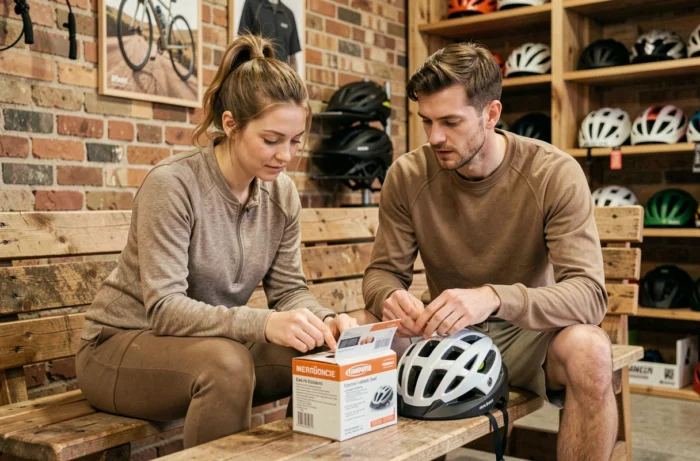
Safety accessories (bicycle helmets, ski protections, visibility vests) must bear a CE marking followed by the normative reference. A bicycle helmet without a standard mention offers no guarantee of protection, regardless of its price.
For equipment intended for children, compliance with size and strength standards is even more critical as morphology evolves quickly. Buying a size up “to last longer” compromises the fit of a helmet or shin guard and nullifies their protective function.
- Bicycle or ski helmet: check the manufacturing date, replace after any impact, even minor
- Joint protections (knee pads, elbow pads): ensure they stay in place during movement, not just at rest
- Reflective vest or armband: check that the reflective power is not diminished by successive washes
Choosing sports equipment in France is not just about comparing prices online. Reading technical specifications, considering repair costs, and checking safety standards form a triptych that every purchase should respect. Equipment suited to its discipline and properly maintained remains the best long-term investment.