When planning a wedding, the question of time comes up before the budget. Spending five minutes with each guest at a dinner for a hundred, or sharing a whole hour with the ten people who matter most: the choice changes everything, from the venue to the atmosphere and the memories you take away. Planning an unforgettable day together starts with deciding on this, because everything else follows from it.
Intimate wedding: set your guest count before choosing the venue
A couple hosting thirty guests in a venue designed for two hundred won’t create an intimate atmosphere; they’ll create an empty one. The venue should suit the number of guests, not the other way around.
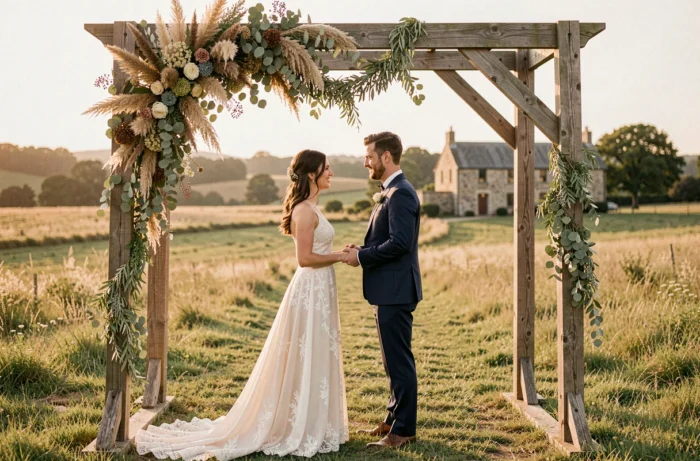
Definitions vary: some planners consider a micro-wedding to have 10 to 30 guests, while others extend the intimate format to 50. Setting your own guest count based on the experience you want helps you avoid being boxed in by a marketing label. You can easily invite 40 people and still have an intimate wedding if the venue, pace and program are designed for that group.
A guide to small weddings emphasizes choosing key moments suited to a close-knit group. In practice, that means planning shared experiences (a single meal, a participatory humanist ceremony) rather than a series of events where the couple disappears.
To explore reception formats that suit these choices, resources such as mon-beau-mariage.fr let you compare vendors based on the size of the wedding you have in mind.
Wedding budget: balance the number of guests with the quality of the experience
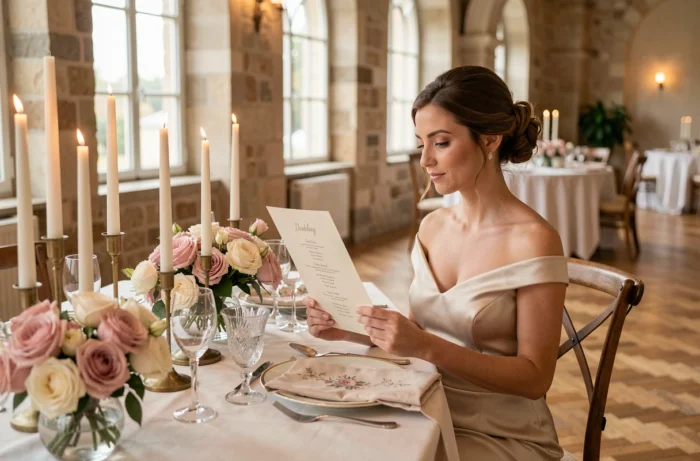
Cutting the guest list doesn’t mean cutting the overall budget. It means reallocating it. With fewer guests, you can invest in a caterer who uses local ingredients, a photographer who stays all day, or a venue with on-site accommodation.
What changes in practice with fewer guests
- The meal goes from a standardized buffet to a multi-course menu served at the table, with each dish tailored to the group
- Floral decorations are concentrated in one space instead of spread across several rooms, making it possible to work with a florist rather than a wholesaler
- You spend more time with each guest, and the couple no longer has to rush from table to table between the cheese course and dessert
A well-planned small wedding isn’t a scaled-down version of a large one; it’s a format in its own right. A common mistake is to keep the program for a reception of a hundred people (drinks reception, dinner, dancing, brunch) and simply scale down the quantities. The result feels disjointed.
Wedding music and Sacem rights: something to sort out in advance
It’s easy to overlook, but music played during the reception can raise legal questions. The legal exception applies to private, free performances within the family circle. In practice, how this is interpreted depends on the circumstances: the venue, whether a paid DJ is present, and the number of guests.
If a professional is hosting the evening, it’s a good idea to clarify in the contract who is responsible for handling the paperwork with Sacem. Some vendors include this formality, others don’t. If in doubt, it’s best to contact Sacem directly rather than rely on a general claim found online.
This administrative detail may seem trivial compared with choosing the dress or the menu, but overlooking it can lead to penalties. Five minutes of checking is all it takes to settle the matter.
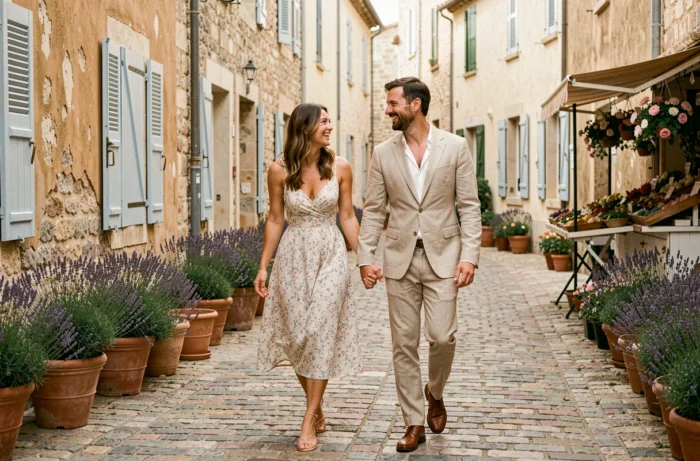
Practical ideas for a memorable wedding day together
An unforgettable day doesn’t depend on piling on surprises, but on two or three well-orchestrated highlights. The trap of a “Pinterest” wedding is wanting everything: a ceremony in the woods, cocktails on a rooftop, a candlelit dinner and fireworks. The couple ends up exhausted and hasn’t enjoyed any of it.
Three formats that work for a small wedding
A Saturday morning wedding brunch that wraps up by mid-afternoon leaves the evening free for the couple. You exchange vows in the late morning, share a generous meal, and everyone heads home before getting tired. The couple gets the evening to themselves, which is rare with a traditional format.
A wedding spread over two short days, with a ceremony on Friday evening followed by lunch on Saturday, lets you space out the events without cramming the schedule. Guests staying on-site create the feeling of a reunion.
An all-day wedding at a single venue: ceremony, meal and evening celebration all in one place. No travel, no logistics between two locations, no stress. The couple can be present from beginning to end.
What makes the memories last
- Personalized vows read aloud in front of a small group make a stronger impression than a formal ceremony
- A meal where everyone sits at the same table sparks a group conversation instead of creating separate clusters
- An unscheduled end to the day, when the couple and their loved ones stay together without watching the clock, creates the best memories
The pace of the day matters more than the logistical details. A wedding where the couple spends three hours taking photos while the guests wait isn’t memorable for anyone. Cut the photo session to an hour, include loved ones in a few shots, then rejoin the group: you gain presence at the expense of poses.
The wedding format should suit the couple, not a universal checklist. The one constant is the time spent together, with the people you’ve chosen, in a venue suited to their number. Everything else is negotiable.